

Recycling is free and the more you recycle, the less rubbish goes to landfill.
Guide to recycling kerbside
If you put non-recyclable items or contaminated product (with food or waste) in your recycling bin, collectors will leave them behind and may not collect everything.
3 simple steps for recycling:
- Keep it clean - rinse or scrub items to remove food scraps
- Remove lids - lids go in the rubbish
- No rubbish - only recyclable items belong in the recycling bin
Recycling right
Knowing what can and can't go in your recycling bin helps reduce contamination and prevent your bin from being rejected.
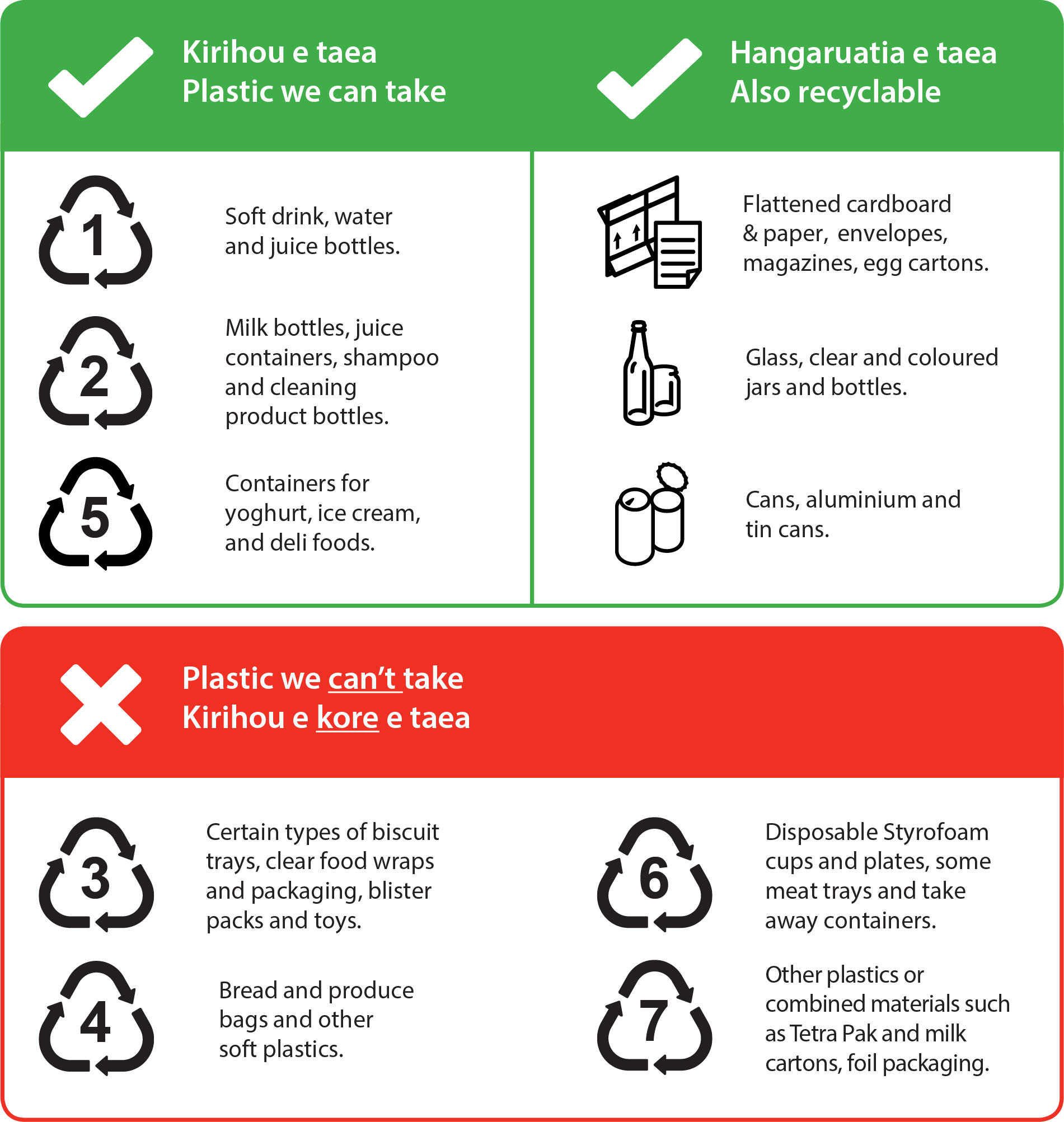
Plastics - grades 1, 2 and 5 only
Only plastic containers marked with recycling numbers 1, 2 or 5 can go in your recycling bin. They need to be clean and have their lids removed.
✅ Accepted:
- milk, soft drink, water and juice bottles
- shampoo, detergent and cleaning product bottles
- ice cream, yoghurt and deli food containers
📌Remove lids and place in the rubbish bin
📌Rinse plastics clean and squash if possible
❌ Not accepted:
- plastic grades 3, 4, 6, 7 or plastics with no recycling symbol
- plastic bags, wrapping
- polystyrene meat trays, packaging
- bubble wrap
- toys
Lids can't be recycled, even if they're made from plastics grades 1, 2 or 5.
Their size and shape can cause issues during the sorting process at the recycling facility. They can fall through and get caught in the machinery, mix with other materials and contaminate the recycling stream.
Put all lids in your general rubbish, regardless of the recycling number.
Paper
Clean paper and cardboard can go in your recycling bin. Flatten cardboard boxes so they take up less space.
✅ Accepted:
- newspaper, magazines
- cardboard - flattened
❌ Not accepted:
- tetrapak cartons
- takeaway cups
Glass
Clean glass bottles and jars can go in your recycling bin. Remove all lids before recycling.
✅ Accepted:
- glass bottles and jars
📌Remove lids and place in the rubbish bin
❌ Not accepted:
- broken glass
- light bulbs
- mirrors
- cookware and Pyrex
- crockery
Aluminum and tin
Clean aluminimum and tin cans can go in your recycling bin. Rinse them before recycling.
✅ Accepted:
- clean aluminum and tin cans
❌ Not accepted:
- pots and pans
- car parts
- items made from mixed materials
What not to put in your recycling crate
🚫 Hazardous items: batteries, gas bottles, chemicals, ash, paint.
🚫 Clothing and textiles, shoes, fabrics
Can I use any type of bin?
You need a Council-approved recycling bin. If your property doesn’t have one, you can buy one from us.
Sorting and preparing your recycling bin
✅ Keep it clean – wash, squash and sort your recycling. Items contaminated with food won't be collected.
✅ Don't overfill your bin – nothing should stick out above the top of the bin. Overfilled bins won't be collected.
✅ Flatten paper and cardboard – bundle it securely under your bin (maximum 1m x 1m).
Collection limits
You can put out a maximum of 2 recycling crates per property. If you're using 2 bins, put all glass in one bin.
Extra recycling?
You can take extra glass and other recyclables to the drop-off centre at 75 Innes Street or your rural transfer station.
Moving house?
Leave your recycling crate at the property for the next occupiers.
Where to buy a recycling crate
- Buy a recycling crate from our customer service counter for $20 each.
- Renters: If your property doesn’t have a crate, contact your landlord or property manager.
- Built a new house: Sign up for kerbside collection at customer service to receive your crate and stickers.
- Take care of your crate - bring it back onto your property after collection.
When is recycling collected?
- Make sure your recycling crate is kerbside before 7am on collection day.
- Check your kerbside collection day to find out when recycling is collected.
Help reduce waste going to landfill
Are you recycling right?
Too many recyclable items end up in landfill because they're contaminated with food.
Watch the video to see how small changes, like rinsing containers, can make a big difference. It also explains how the choices we make when shopping can help reduce waste.