
A review was commissioned to independently assess how Council's forestry consenting and compliance system is working.
The review considered evidence and tested whether Council's processes and requirements are clear, practical, consistently applied and proportionate to the environmental risks facing Tairāwhiti.
The independent Panel, chaired by Hon Christopher Finlayson KC, completed its review on 30 October 2026.
The Panel found that Council's regulatory approach is sound and appropriately reflects the environmental risks facing Tairāwhiti, It also identified improvements needed from Council, the forestry sector and central government.
No results found for ""
Key findings
- Council has acted diligently, in good faith and with appropriate regard to Tairāwhiti’s environmental risks, and that its enforcement decisions have generally been careful, evidence-based and legally supported.
- Council’s consenting, monitoring and enforcement capability has strengthened, and industry practice and application quality have also improved, but both sides still have work to do.
- Consent delays have multiple causes, including incomplete or changing applications, applicant-held time, technical complexity, limited specialist capacity and Council processes.
- Council needs to improve clarity, expertise and coordination, particularly through better regulatory guidance, stronger in-house forestry capability and more integrated consenting and compliance processes.
- Formal enforcement remains necessary, but should sit alongside more proactive engagement, education and early intervention to prevent problems before they escalate.
- A broader long-term approach is needed, with the Panel calling for catchment-scale planning, stronger national settings and active Government involvement in future harvesting and land-use transition.
Recommendations
The Panel identified improvements needed across Council's regulatory processes, forestry industry practices and wider national settings, highlighting the issues can't be solved by Council alone.
- Clearer communication and guidance – providing clearer expectations, simplifying and better explaining consent conditions and improving the timeliness of information for applicants and consent holders.
- Greater technical capability – strengthening access to specialist forestry expertise to support more efficient and consistent regulatory decisions.
- Better coordination – improving handovers between consenting and compliance and considering a dedicated, integrated forestry hub to strengthen coordination across Council functions.
- More proactive compliance approaches – increasing engagement, education and monitoring alongside formal enforcement activity.
- A more strategic approach – improving coordination across forestry regulation and wider land-use transition work.
- Higher-quality consent applications – ensuring consent applications are complete and supported by appropriate technical information to reduce delays and repeated requests for further information.
- Stronger industry capability – improving forestry practices, specialist expertise and communication of regulatory obligations to contractors.
- Greater collaboration – encouraging information-sharing, practical learning and the sharing of good practice across the sector.
The Panel identified wider challenges that cannot be addressed by Council or the forestry sector alone, including:
- National forestry regulations – addressing gaps in national settings, particularly the ability to manage forestry activities on highly vulnerable land.
- Slash and discharge management – providing clearer national direction on managing forestry slash and discharges.
- Specialist forestry competency – developing nationally consistent requirements for suitably qualified and experienced people (SQEPs).
- Long-term land-use transition – supporting a coordinated approach to future harvesting and land-use change.
The Panel also recognised the Crown's longstanding involvement in forestry in Tairāwhiti and highlighted its important role in addressing these challenges.
Next steps
We'll work through the recommendations to identify improvements needed.
An implementation plan will be developed, building on improvement work already underway and outlining further actions. Updates on progress will be published here as work progresses.
About the review
The independent panel looked at how Council’s forestry consenting and compliance system works in practice. This included whether:
- requirements are proportionate to environmental risk
- consent conditions are clear and practical
- consenting and compliance processes are efficient and consistently applied
- unnecessary costs, delays or uncertainty can be reduced while maintaining strong environmental outcomes.
The review considered a selection of consenting and compliance cases, consent conditions and operational examples.
Hon Christopher Finlayson KC, Chair

The Hon. Christopher Finlayson KC is a barrister. He was admitted to the Bar in 1981 and was a partner in two firms between 1986 and 2002. After going to the Bar at the beginning of 2003, Mr Finlayson practised as a barrister until September 2005 when he entered Parliament as a National List MP, serving until January 2019.
Mr Finlayson was a Cabinet Minister between 2008 and 2017 holding a number of portfolios. He represented New Zealand in the International Court of Justice in 2013 when Australia challenged Japanese whaling in the Southern Ocean. Mr Finlayson also chaired the Privileges Committee of Parliament from 2011 to 2017.
After returning to the Bar, Mr Finlayson has practised in a number of areas and has written two books on his time in Parliament. First, He Kupu Taurangi which recounts his work as Minister for Treaty Waitangi Negotiations, and Yes, Minister, which is a Parliamentary sketch.
Dr Marie Doole
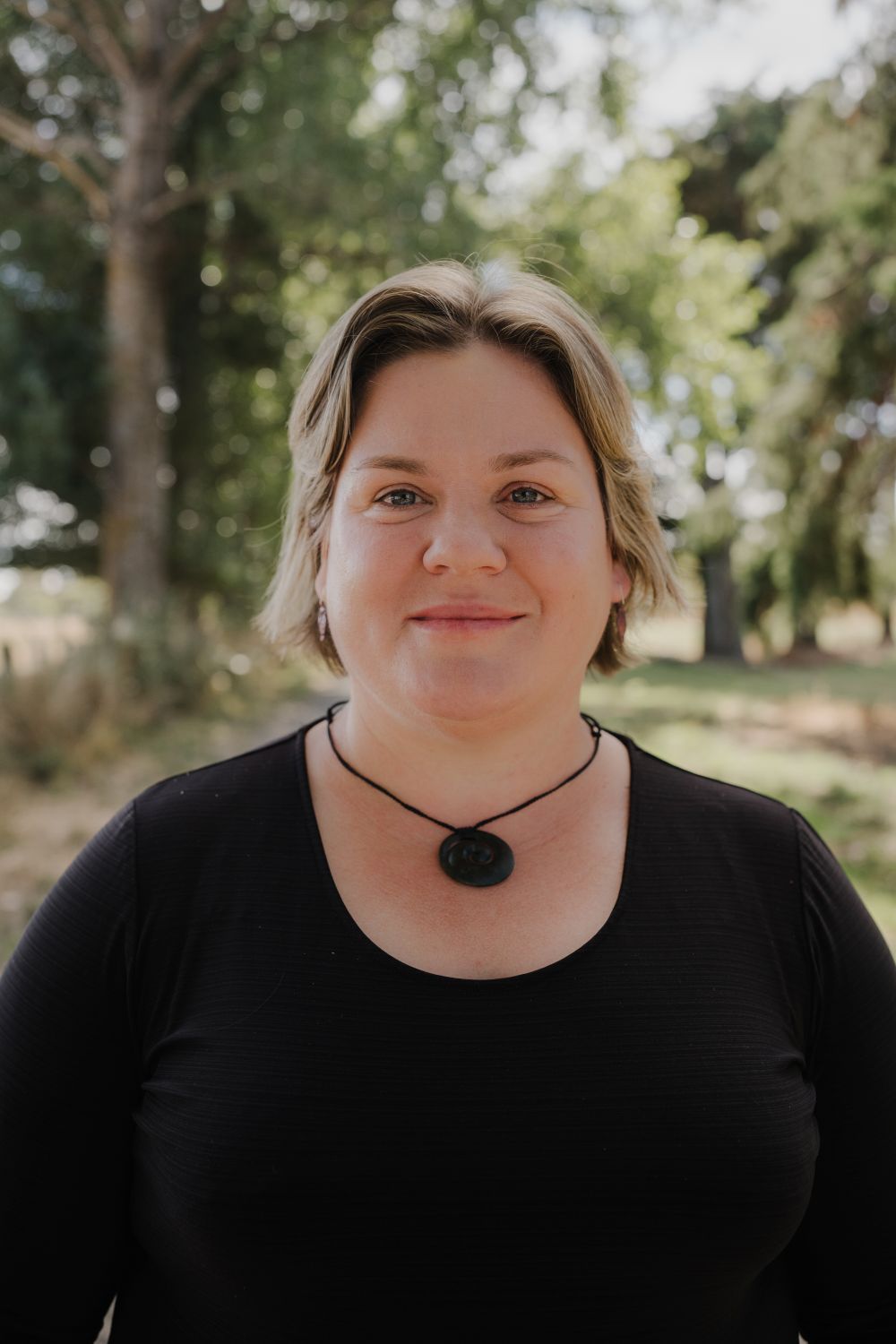
Marie is the Director of Mātaki Environmental, an advisory firm focused on research, strategy and regulation. Marie holds a Bachelor of Science, a Post Graduate Diploma in Environmental Management, Masters in Environmental Legal Studies (Hons) and a PhD from the University of Waikato.
Marie has a background in central and local government policy and enforcement, consulting and the NGO sector and is a qualified RMA Hearings Commissioner. Marie is one of the inaugural Distinguished Practitioner Fellows of the Australasian Environmental Law Enforcement and Regulators neTwork (AELERT) and an Adjunct Research Fellow at Victoria University of Wellington’s Te Kura Tātai Aro Whenua School of Geography, Environment and Earth Sciences.
Vanessa Eparaima

Vanessa is a business consultant, company director, and trustee who sits on a range of commercial, investment, and not-for-profit boards. She is chair of the tertiary education institution, Te Wānanga o Aotearoa, the co-chair of the forestry land management company – CNI Iwi Land Management Ltd, tasked with managing the land under the Kaingaroa Forest Estate on behalf of eight iwi owners, and a trustee on the Tūaropaki Trust and chair of the Tūaropaki Power Company.
Vanessa was the inaugural chair of Raukawa Iwi Development, a high-performing iwi commercial company, and remains a director. She was the former executive chair and Treaty of Waitangi negotiator on behalf of the iwi of Raukawa and for the Raukawa Settlement Trust.
Vanessa is a passionate advocate for Māori, community, economic development, and health, social, and environmental issues. She has a strong history of working with the wider community, kaumātua, iwi chairs, Ministers, members of Parliament, and numerous stakeholders to achieve positive outcomes for those she serves.