

The spartina control phase is now complete, marking a major programme milestone. Planning is underway for the next stage - restoring native vegetation along the Taruheru. The preferred site is the Botanical Gardens riverbank, which offers high public visibility and an opportunity to showcase the biodiversity gains from this restoration work.
Spartina grass was removed from the Taruheru River because of the serious harm it caused to the river ecosystem. It trapped sediment and raised land levels, displacing natural habitats for fish, birds and shellfish. The dense growth also collected urban pollutants including heavy metals and reduced oxygen in the water, making it difficult for aquatic life to thrive.
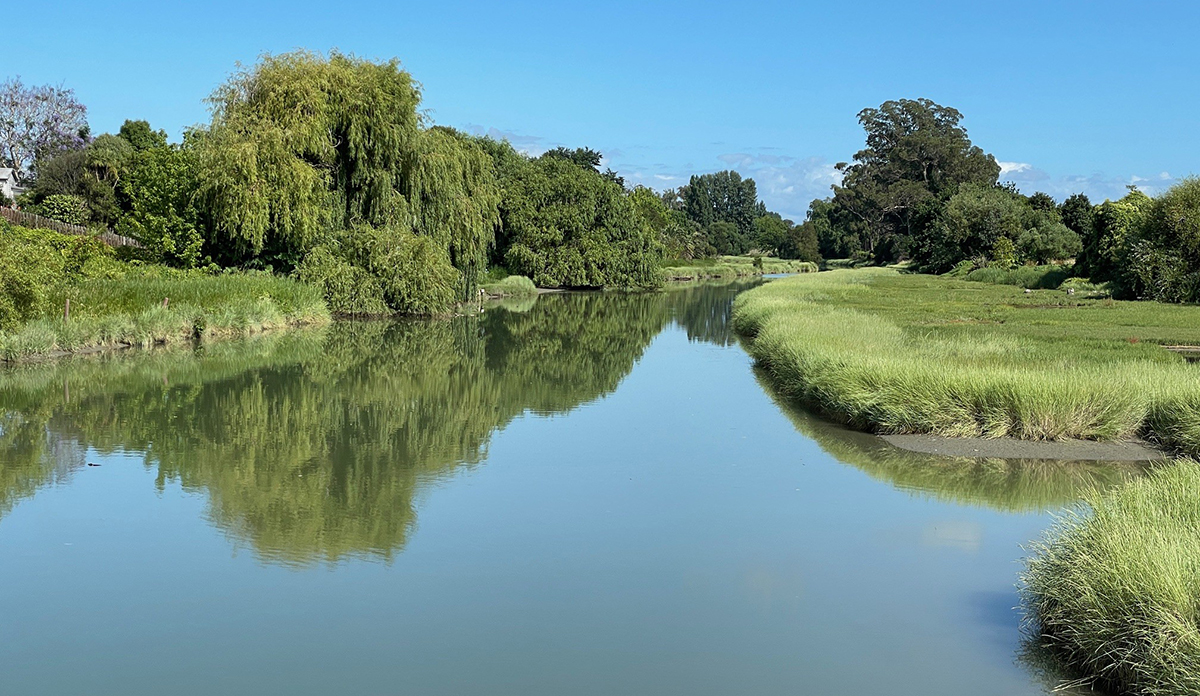
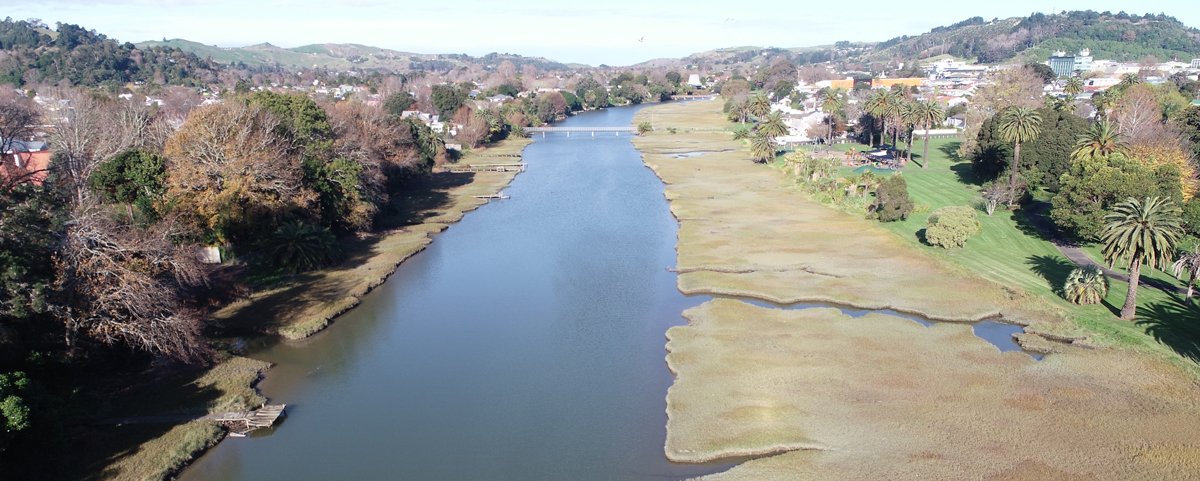
Stages of removal
Removing spartina helps restore the health of our river. It brings back mudflats and saltmarsh habitats for native species like mud crabs, shellfish and wading birds. It allows us to replant native vegetation, improves water quality and oxygen levels and restores natural tidal flow. These changes support biodiversity and make the ecosystem more resilient.
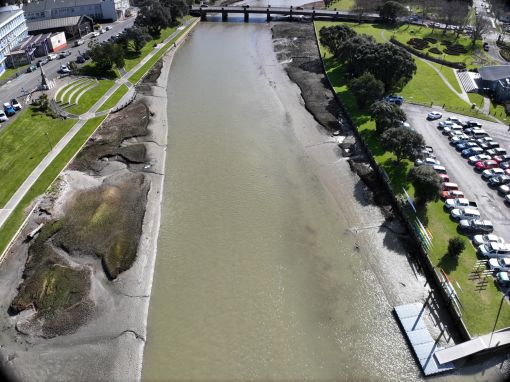
Spray trial January 2024
Spartina grass on the mudflats of the Taruheru River from the Peel Street Bridge to the Marina boat ramp was sprayed as a trial in January 2024.
By March the sprayed area was dying off and the spartina banks clearly showed slumping and were starting to be broken down and removed by the normal tidal flow.
The use of the herbicide treated the spartina without causing adverse effects on non-target plants, fish or animals.
Sampling overview
11 and 13 January (Pre-spray): Water and sediment samples (IDs 240112-078 & 240113-040) showed no detectable contaminants.
17 January (Post-spray): 2 water samples and one sediment sample (ID 240117-117) were collected.
- Sediment: All results non-detect.
- Water: Two low-level detections of Atrazine, a commonly used herbicide:
- 0.17 µg/L at Turanganui River – Gladstone Bridge
- 0.14 µg/L at Taruheru River – Peel Street Bridge
Context and interpretation
- Atrazine levels were just above the maximum acceptable value for drinking water — however, drinking water is not sourced anywhere near these sites, so this comparison is only to illustrate how low the detected levels were.
- Atrazine can enter waterways via agricultural runoff, not necessarily from direct spray.
- Tidal flushing at both bridge sites likely helped prevent any accumulation of pesticide in sediment.
Ongoing monitoring
Monthly sampling at multiple urban and spartina sites includes:
- Suspended sediments
- Bacteria
- Metals
- Hydrocarbons (eg petrol, paint)
Pesticides are not routinely monitored unless there's a specific reason.
Summer recreational monitoring focuses on bacteria levels, with results shared via LAWA
About Atrazine
- Type: Herbicide
- Use: Commonly applied to control broadleaf and grassy weeds
- Environmental Note: While low-level detections like these are not uncommon post-spray, Atrazine is known to be persistent in aquatic environments and can impact aquatic life at higher concentrations.
Stage 2 - November 2025
Spraying was carried out on the mudbanks between Peel Street Bridge and Lytton Road Bridge in November 2025, using the herbicide Haloxyfop-methyl. Application methods varied by location and included drone, hose reel spray unit and knapsack. All work was carried out in accordance with EPA regulations for the control of aquatic pest plants.
Reports and documents
The following documents support the project's environmental monitoring, ecological benefits and EPA permission.
No results found for ""
Questions and answers about Spartina removal
- Re-establishing natural mudflats and saltmarsh habitats for native species like mud crabs, shellfish and wading birds.
- Creating opportunities to replant native vegetation to enhance biodiversity.
- Restoring natural tidal flows and sediment movement.
- Improving water quality and increasing oxygen levels.
- Supporting native biodiversity and strengthening overall ecosystem resilience.
Yes. Spartina traps contaminants in sediments, including urban pollutants. Removing it allows natural tidal flushing to occur, helping disperse pollutants these pollutants and reduce toxicity in the river environment.
Fish
- whitebait - īnanga
- flounder
- mullet
- kahawai
Birds
- Poaka - Pied Stilt
- Torea – Oystercatcher
- Matuku Moana - White-Faced Heron
- Kotare - Kingfisher
- Kotuku Ngutupapa - Royal Spoonbill
Shellfish
- cockles - tuangi
- pipi
- mud snails
Benthic invertebrates
- polychaetes
- molluscs
- crustaceans
No - removing Spartina won’t make a difference to flood risk.
Peak flood levels in the urban part of the Taruheru River are mainly influenced by water levels in the Waimatā and Tūranganui rivers where they converge with the Taruheru. While some sediment may shift as Spartina breaks down, this is not expected to have significant impact on flooding.
Approximately 10 hectares of Spartina was targeted for removal in the Taruheru River estuary.
A targeted herbicide, haloxyfop-methyl was used to treat the Spartina. It was applied using drones as well as knapsack and hose reel spray units, depending on access and location.
Spraying was carried out at low tide in dry, calm weather conditions to ensure effective application and minimise environmental impact. The herbicide is EPA-approved and breaks down quickly and leaves very low residue after use.
No. Survey have confirmed that nesting birds do not use Spartina-dominated mudflats and ongoing monitoring continues to check for any changes.
Water quality is tested before and after spraying by independent contractors to ensure safety. In addition, long-term ecological monitoring is built into the project to track any environmental impacts over time.
Once treated, the dead Spartina gradually breaks down through natural tidal processes.
After the area is cleared, native vegetation will be replanted to restore important habitats, particularly for taonga species such as mud crabs and shellfish. Ongoing monitoring will continue to track how the ecosystem recovers and responds over time.
Who led the project?
The project is led by Haumanu Tū Ora (H2O) a collaborative initiative between Council and mana whenua. Together, they worked to restore the health of urban waterways in Tūranganui a Kiwa.
The project was funded by Ministry for the Environment and Council.
For more information
- Follow Haumanu Tū Ora on Facebook
- Visit our Pest and Weeds Hub