
6 July 2026
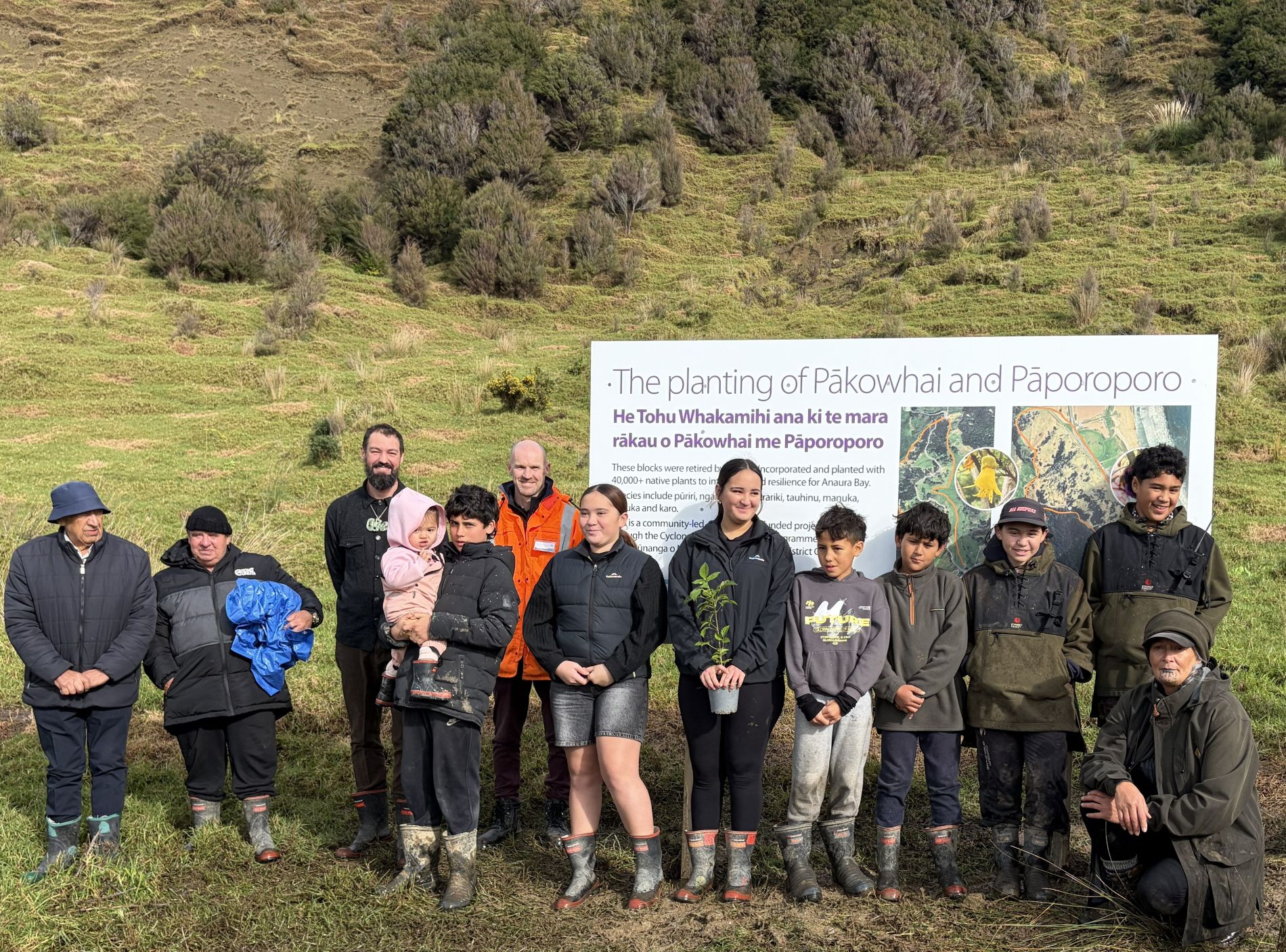
The sun was shining over Anaura Bay last week as mana whenua, councillors and staff gathered for a karakia marking the start of a major native restoration project that will help protect the community from future severe weather events.
More than 40,000 native plants will be established across 40 hectares of the Pākowhai and Pāporoporo blocks in a community-led, Government-funded recovery initiative designed to mitigate stormwater flows, improve the resilience of Anaura Road while reduce the likelihood of landslips, erosion and flooding.
The project has been prioritised by Te Rūnanga o Ngāti Porou through the $36.8 million Roadside Drainage Supporting Iwi Communities recovery programme, recognising the importance of strengthening resilience for vulnerable communities across the region.
Mayor Rehette Stoltz said the project will serve as a trial and case study of native planting coupled with drainage improvements to reduce flooding to protect public and private infrastructure.
"As a Council, our focus is often within the road corridor, but we can achieve so much more when we partner with communities and landowners on long-term solutions," she said.
Anaura Bay has been heavily impacted by severe weather in recent years, with recurring landslips, erosion and flooding leaving the small community isolated on multiple occasions.
Planning for the project began in 2025, bringing together the Anaura community, iwi and Gisborne District Council to develop a long-term solution that works with the natural environment rather than against it.
"This project is a great example of community-led recovery in action. By working together, we're creating lasting benefits for our environment, our infrastructure and the people who call Anaura Bay home," added Mayor Stoltz.
Over time, the planting of ten native species will help stabilise vulnerable hillsides, improve natural drainage, restore native vegetation and reduce the risk of future erosion.
Native trees develop deep root systems that bind soil, improve water infiltration and strengthen slopes, providing long-term protection for the surrounding landscape.
Ben Tahata, Chair of Anaura Incorporated, said shareholders had strongly supported returning the whenua to native bush.
"Council should be congratulated for the partnership and initiative that the Anaura community has embraced," he said.
"We look forward to continuing this partnership to address the recurring landslips, erosion and flooding that have affected the Anaura area for many years."
Project co-lead Alison Waru said seeing the project become a reality had been deeply personal.
"This has been a dream come true - not only for the protection of our papakāinga and whānau, but also in memory of my parents, whose whare I now live in, and my husband, who I know has guided me every step of the way and beyond."
Fellow project co-lead Linda Tatare said the project had given the community renewed optimism for the future.
"Planting Pākowhai will, over time, help protect access into the bay and reduce our isolation, while planting Pāporoporo will absorb much of the floodwater and help protect our papakāinga from future flooding."
"We also planted 50 pūriri trees to honour the lives of those who have lived on this whenua. It was wonderful to see whanaunga return home and join the entire community in this special occasion."
Anaura Station Manager Max Hayes said the initiative was about much more than planting trees.
"This is the final 240 hectares of our coastal hill country to be retired from farming and returned to native forest," he said.
"We know the benefits of this project will extend well beyond our farm boundaries and into the wider Anaura, Nuhiti and surrounding communities."
Planting will continue over the coming weeks, with the project expected to deliver lasting environmental, cultural and resilience benefits for Anaura Bay and future generations.
Project at a glance
- Location: Pākowhai and Pāporoporo blocks, Anaura Bay
- Plants: More than 40,000 native plants
- Area: Approximately 40 hectares
- Species: 10 native species including pūriri, ngaio, oioi, wharariki, tauhinu, harakeke, manuka, kanuka and karo