
June 2026
The Waingake transformation programme has been recognised nationally, winning the Large Scale Restoration Project category at the Ministry for Primary Industries’ 2026 Growing Native Forests Champions Awards.
The award was presented today at Fieldays in Hamilton, recognising the programme as a leading example of large scale native restoration in Aotearoa.
Delivered in partnership with mana whenua Maraetaha Incorporated and supported by Ngāi Tāmanuhiri, the Waingake transformation programme is transitioning more than 1,200 hectares of former pine plantation into permanent indigenous forest.
Gisborne District Council Chief Executive Nedine Thatcher Swann says the award recognises the strength of the partnership behind the programme and the collective effort that has brought it to life.
“This recognition reflects years of collaboration between Council, mana whenua, contractors, kaimahi and the wider community,” she says.
“The award acknowledges the many people who have contributed their time, knowledge and hard work to help bring this vision to life.”
“It also reflects the foresight shown by Council in 2018 when it committed to a long-term vision of large scale native reversion across Waingake, recognising the environmental, cultural and community benefits this would deliver over generations.”
“Waingake demonstrates what can be achieved when we work together with a long-term vision for the health of our environment and our people.”
The programme is one of the largest native restoration projects in Tairāwhiti. Its restoration work is helping reduce erosion risk, improve water quality and restore biodiversity. The programme also helps protect critical water supply infrastructure through nature-based solutions.
Maraetaha Incorporated Chair Bella Hawkins says the transformation of Waingake reflects a shared aspiration to see the whenua flourish once again.
“The regeneration of Waingake-Pamoa is the essence of a relationship founded on mutual respect, shared aspirations and a collective responsibility to manaaki and care for our taiao.”
“As Mana Whenua, we have always held a long-term vision for this whenua – one where the ngahere is thriving, our wai is healthy, and future generations are connected to and actively caring for the whenua that sustain them.”
“This partnership demonstrates the potential that exists when we work together with common goals. By combining knowledge, resources and a shared sense of purpose, we can create lasting outcomes for both people and our environment – mahi tahi.”
“It's rewarding to see the ngahere returning and to know that the work being undertaken today will leave an enduring legacy for our tamariki and mokopuna. This is not simply about restoring whenua; it is about restoring connections between people, place and future generations.”
Director of Liveable Communities Michèle Frey says the programme is helping demonstrate what large-scale restoration can look like in Tairāwhiti.
“Waingake is demonstrating how large scale restoration can deliver environmental, cultural and community benefits for generations to come,” she says.
“It’s helping show what restoration at scale can achieve and the role it can play in shaping the future of our region.”
The success of the programme has been made possible through the support of funding partners including One Tree Planted, Trees That Count, Ministry for Primary Industries’ One Billion Trees Fund and the Department of Conservation's Jobs for Nature programme.
Waingake has become a place for learning and collaboration, hosting site visits and sharing insights with others interested in large-scale restoration and land use transition.
Follow Waingake Ngahere Ora on Facebook and Instagram for updates and behind-the-scenes content from the restoration programme.
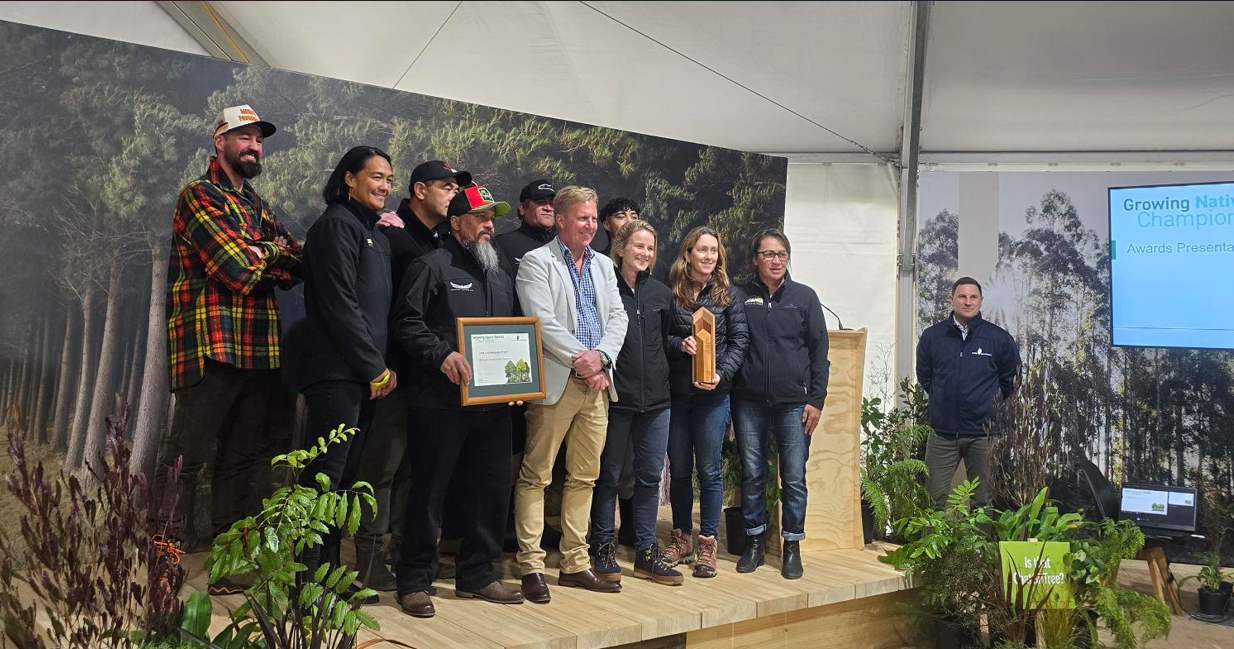
Photo: Awarding of the Large Scale Restoration Project Champion
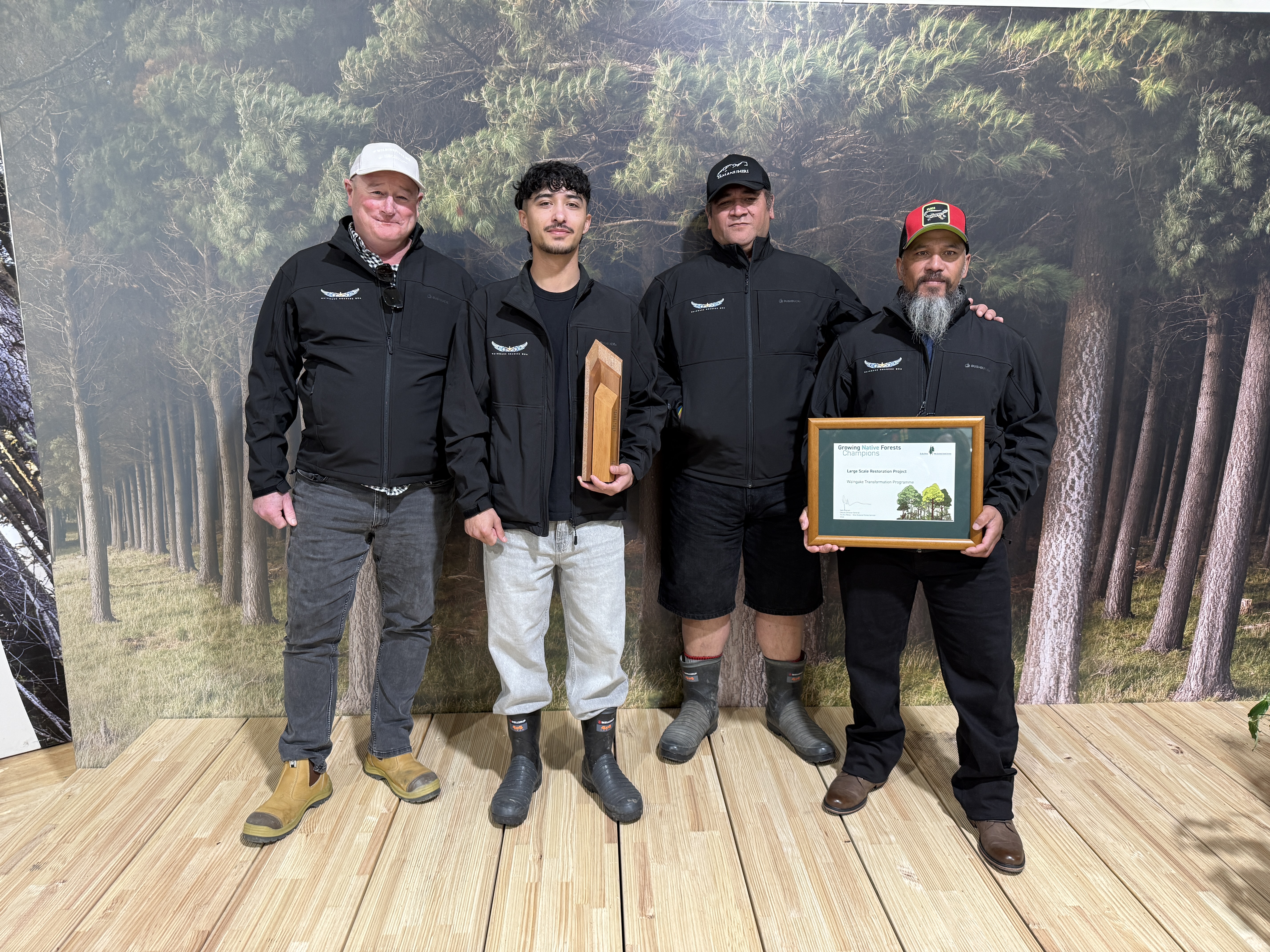
Photo: Council Waingake team