

During heavy rain, the city's wastewater system can get overwhelmed by too much rainwater. To prevent overflows on private property, we need to open emergency sewer valves to release the pressure.
What causes emergency discharges in heavy rain?
Gisborne city's wastewater network and stormwater network are separate systems. During heavy rain, stormwater can flood parts of the wastewater network, causing overflows of sewage onto private properties and roads from manholes, posing health risks.
To prevent this, Council opens the overflow valves to release the excess water, discharging diluted wastewater into the river. Although mixed with rainwater, it still poses a health risk.
We seriously consider all options before opening overflow valves to discharge diluted wastewater into our city's rivers. It's only done as a last resort and in the specific problem areas.
Why we open the emergency wastewater valve
Heavy rain can quickly increase the volume of water in the wastewater system, putting pressure on pump stations that transfer wastewater to the treatment plant.
To stop sewage from backing up into homes and onto roads, we sometimes need to release excess water and pressure by opening the emergency sewer valves. This is done only when necessary and only in the affected areas to protect public health. The discharged water, although diluted with rainwater still poses a health risk.
Safety at rivers and beaches
When valves are opened, temporary warning signs are placed at affected recreational areas. These signs advise against swimming, fishing or gathering shellfish in the city’s rivers and at Waikanae and Kaiti beaches.
- Signs remain in place until 5 days after the valves are closed.
- Hauora Tairāwhiti Medical Officer of Health is notified each time valves are opened.
How we notify you
As soon as an emergency valve is opened, we post an alert on our website and Facebook page
If you want to receive notifications directly to your phone or smartwatch, install the Antenno app
Stormwater and wastewater are separate systems
Stormwater: rainwater that runs off hard surfaces like roofs and driveways. It flows directly into streams and rivers without going through any treatment plant.
Wastewater also known as sewage, this is used water and waste from your homes (kitchen, bathroom, laundry and toilet) and industries. It's piped to the treatment plant for processing.
Who owns all the pipes and network?
The city wastewater network is designed to handle the needs of households and businesses for the next 15+ years.
Council owns and manages half of the wastewater network. while the other half is owned and managed by individual property owners.
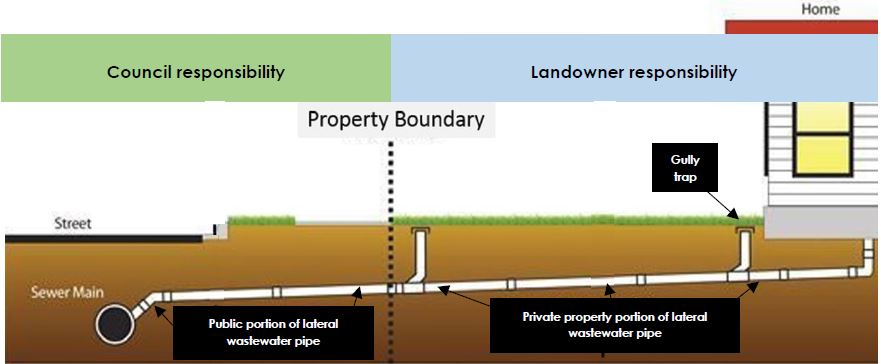
Who is responsible for the pipes and network?
You're responsible for the pipes that run from inside your house to your property boundary.
At the boundary, your pipe (lateral)connects to the city's main wastewater network, which Council manages.
Council’s wastewater network includes:
- 223km of mains pipes (about the same distance from Gisborne to Napier)
- 2806 manholes
- 40 pump stations
- The wastewater treatment plant.
Our improvement efforts
- Increasing the size of our wastewater pipes where needed.
- Upgrading our stormwater network to handle larger floods.
- Replacing leaking pipes and access points.
What's the problem?
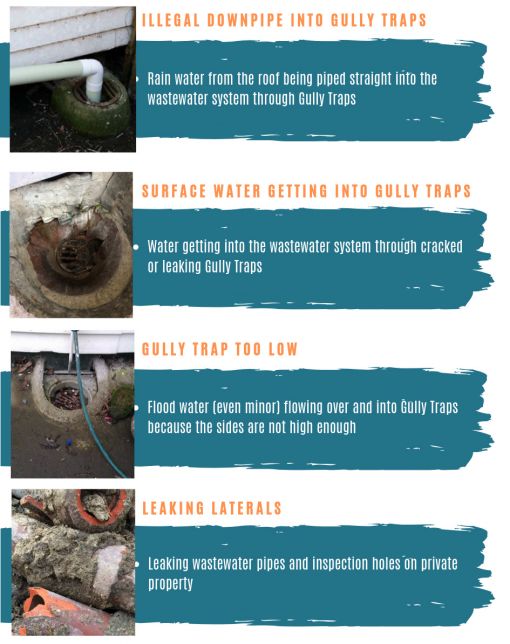
Problems
- Stormwater floods the wastewater network.
- To prevent this, we must remove the excess stormwater from the wastewater network.
- If we don't discharge the excess water, wastewater overflows into homes and streets, posing health risks.